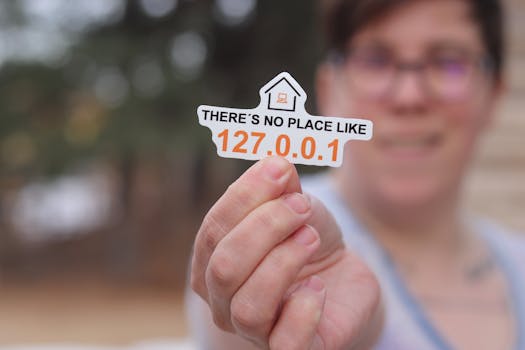
Decrypting Your Digital Footprint: The IP Address Enigma
Your digital abode's coordinates—your IP address—are not an impenetrable secret, though comprehending their implications demands a discerning eye. Imagine it as your digital residence's street address, broadcasting your online presence. This single point of origin, your IP, reveals a wealth of data about your online activities, a constant digital signature. A malicious actor, armed with this information, could potentially triangulate your physical location. This is a real concern. The implications are far-reaching and chillingly real.
Several avenues exist to unveil this crucial piece of your digital identity. The most readily available method involves using a readily accessible online service that provides your public IP address—a quick and simple process. Websites offering this functionality are plentiful, usually dependable. However, this merely scratches the surface of what's truly at stake.
Your home network's gateway—your router—conceals additional details, including your local IP address (used internally) and the external public IP your router utilizes for internet access. Accessing your router's configuration page (typically through a web browser) reveals this granular, internal network view, giving a more detailed perspective of your home network's digital fingerprint.
But the most insidious exposure of your online persona lies not in these simple retrieval methods, but in the pervasive tracking your online activity leaves behind. Each website you visit meticulously logs your IP address, a digital breadcrumb trail detailing your online journey. While innocuous individually, these seemingly trivial data points, when aggregated, create a comprehensive map of your online habits—a potent weapon in the hands of those who would exploit you. Think of your IP as an unwavering shadow, documenting your entire online existence.
Your IP address isn't confined to website interactions. It's broadcast with every online service interaction, even those claiming anonymity. Every online transaction—a fleeting whisper—is geotagged with your IP address. These seemingly ephemeral digital whispers, when collected and analyzed, form a crystal-clear portrait of your habits, interests, and physical location, making you susceptible to targeted cyberattacks and identity theft. Data breaches are a common occurrence.
Protecting your digital domain necessitates unwavering vigilance. True digital privacy isn't about the absence of surveillance, but rather the control over what's tracked and its utilization. Understanding your IP address is paramount to reclaiming that control.
Unveiling the DNS Labyrinth: Tracking Your Digital Trails
The Domain Name System (DNS), the internet's directory, converts human-friendly website addresses (like "example.com") into the machine-readable IP addresses computers use. Every website visit generates a DNS query—a request to a DNS server for that site's IP. This apparently simple action generates an audit trail of your online activities, subtly exposing your browsing preferences and the websites you frequent. This fact demands careful consideration, particularly if privacy is a priority, since traditional DNS servers frequently log this information. DNS logs can reveal browsing history.
Consider the analogy of a phone call; conventional calls leave a record of the numbers involved. Similarly, DNS requests produce a log of the websites accessed, indirectly revealing your IP address. Although this data alone doesn't immediately expose your identity, combined with other information, it paints a detailed picture of your online life, highlighting the urgent need for sophisticated privacy countermeasures like VPNs or Tor.
Criminals exploit DNS queries for precisely targeted attacks. Monitoring your DNS requests unveils your passions and predilections, allowing for highly personalized phishing campaigns—attacks specifically tailored to your personality and online behavior. The use of secure DNS providers becomes, therefore, a critical defense against these insidious threats.
Mastering the interplay between your IP address and the DNS system is pivotal for identifying vulnerabilities and enacting robust security measures. It’s about perceiving the unseen connections, tracing the invisible paths forged by every click and connection, and ultimately, seizing control of your digital fate.
The Covert War for Your Digital Identity: Mastering Your IP Address
Your online existence isn't a phantom; it's a meticulously documented journey, each click a breadcrumb in a trail leading straight to you. At the head of this treacherous path sits your IP address, a digital signature broadcasting your location, habits, and even vulnerabilities. Ignoring this fundamental truth is like navigating a minefield blindfolded—a catastrophic oversight.
The insidious threat isn't some far-off, theoretical danger; it's the nonchalance of everyday internet users. Many blithely assume a cloak of invisibility, failing to recognize the alarming ease with which their actions can be traced, their digital footprints painstakingly reconstructed. This reckless abandon is tantamount to leaving your digital fortress gates wide open, inviting unwanted intrusions. This isn't paranoia; it's pragmatism.
Consider the chilling implications: your precise physical location, exposed through your IP address, becomes a tempting target for cunning phishers and even physical threats. This isn’t merely a theoretical risk; the lines between your online and offline lives have become hopelessly blurred. You've effectively provided a detailed roadmap to your existence, a digital treasure map for malicious actors.
Beyond the specter of physical harm lies the omnipresent surveillance: relentless data harvesting for purposes both insidious and innocuous. This unrelenting tracking – a constant digital shadow – meticulously chronicles your online behavior, building a detailed profile for targeted advertising and other nefarious activities. This relentless monitoring erodes your privacy, transforming you into a predictable commodity. The sheer scale of this insidious observation is frequently underestimated, often completely unknown.
Reclaiming control demands proactive measures. Begin by understanding your IP address – its power, its vulnerability, and its implications. Then, employ the tools necessary to obfuscate and shield your digital footprint. A Virtual Private Network (VPN), for example, acts as an impenetrable digital shield, masking your true location and encrypting your internet traffic. Think of it as a digital invisibility cloak, rendering you untraceable to prying eyes. If you're struggling with annoying login issues, you might want to check out our guide on how to change apple id. And if your iPad is frozen, see our guide on how to reset an ipad. For more on the psychology of online behavior, you might also find our article on how to remove psychology interesting. Understanding these processes is crucial to building a comprehensive security strategy, especially if you’re interested in learning how to use jumper cables troubleshooting.
By seizing control of your digital narrative, by comprehending the extent of the data trail you leave, you shift the balance of power. You transcend the role of a passive target, becoming the architect of your own digital destiny. This isn't merely about technical proficiency; it’s about safeguarding your identity, protecting your privacy, and ultimately, securing your online life. The stakes are too high to do otherwise.